Shipping a motorcycle isn’t just about getting it from A to B. Shipping a motorcycle is about keeping it in great condition, avoiding avoidable costs, and making the whole process run smoothly.
If you move your bike seasonally or store it for the winter, timing and prep are everything. This guide covers when to ship, how to winterize for transport, and how to compare open vs. enclosed options. Plus, see how uShip helps you find the best price and service level all in one place.
Why Riders Ship Seasonally
- Snowbirds: Head south for mild temps and keep riding while winter sets in up north.
- Collectors & event riders: Move bikes for shows, rallies, or auctions, often on predictable seasonal lanes.
- Cold-weather storage: Relocate from outdoor storage to an indoor facility before the first freeze.
Common routes: Northeast ↔ Florida, Midwest ↔ Arizona/Texas, and short local moves into indoor storage.
Winter Shipping: Why Timing Matters
Peak vs. off-peak: Late fall into early winter tends to be busier as riders prep for storage or head south. Late winter to early spring often eases. Booking earlier generally means better choices and pricing.
Carrier availability: Severe weather can limit routes and pickup access, especially on rural roads or steep grades. Some carriers adjust their schedules during storms, so plan ahead and remain flexible with pickup/delivery windows.
Weather delays: Snow, ice, and road closures can add significant time to travel. Build a small buffer before a trip, event, or storage deadline.
Timing Tips (Quick Wins)
- Ship before the first deep freeze. You’ll dodge the worst road conditions and have more carrier options.
- Book 3–6 weeks ahead for winter moves; last-minute requests can cost more and reduce choice.
- Offer a pickup/delivery window. A few days of flexibility helps carriers route around storms and still hit your target.
How to Prepare Your Motorcycle for Transport (Winter Edition)

1) Clean & document
- Wash thoroughly (including wheels, undercarriage, engine cases, and chrome). Dry completely.
- Take time-stamped photos from all angles, plus close-ups of existing nicks or wear.
- Note any fluid weeps or loose hardware.
2) Fuel: stabilize or reduce (follow carrier policy)
- Most road carriers prefer ~¼ tank or less for loading safety.
- If the bike will sit, add an ethanol-compatible stabilizer, run the engine briefly to circulate, and avoid overfilling (temperature expansion).
- If your carrier requires it (or you’re storing long-term), ask whether they prefer you to drain the tank. Always follow the carrier’s written guidance.
3) Battery care
- For shipping to storage, disconnect the negative terminal or remove the battery and store it indoors on a smart trickle charger.
- Confirm the carrier’s preference; some require batteries connected for winch loading.
4) Tires & fluids
- Inflate to the manufacturer’s spec; inspect for cracks/flat spots.
- Check engine oil, brake fluid, and coolant (if liquid-cooled). Consider winter-weight oil if the bike will run soon after arrival.
- Lube the chain after cleaning (or apply a corrosion inhibitor to exposed metal).
5) Protect surfaces
- Use a breathable, motorcycle-specific cover—never a plastic tarp (it traps moisture).
- If traveling on open transport in salted regions, a fitted cover plus a light corrosion protectant on exposed fasteners can help. Secure the cover so it won’t flap and scuff paint.
6) Tie-downs & locks
- Confirm lock/alarm policies with your carrier. Many prefer steering unlocked and alarms off for smooth loading.
- If you’re present during loading: use soft loops + ratchet straps, attach to solid points (frame/triple tree), and compress suspension slightly—not excessively.
7) Paperwork & comms
- Keep license/registration/insurance handy.
- Share accurate pickup/delivery contacts and access notes (gates, narrow streets, snow berms, low trees).
- Review the Bill of Lading (BOL) at pickup, and re-inspect on delivery.
Open vs. Enclosed Motorcycle Shipping
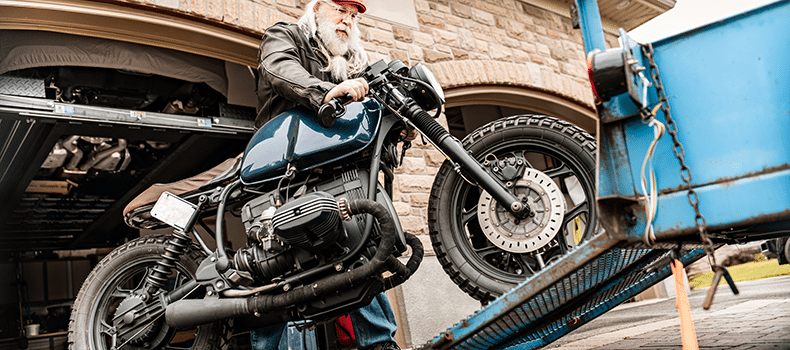
Both methods can be safe; choose based on your budget, protection needs, and timing.
| Feature | Open Transport | Enclosed Transport |
|---|---|---|
| Cost | Most affordable (space shared with multiple units) | Higher (fewer units per load; premium equipment) |
| Protection | Exposed to weather/road residue | Shielded from elements and debris |
| Availability | Widely available year-round | Fewer carriers; book earlier in winter |
| Best for | Everyday riders, budget-focused moves | Vintage, custom, high-value, or show bikes |
| Cleanliness | May arrive dusty/wet | Typically arrives clean |
Also consider: Some carriers offer motorcycle-only trailers, wheel chocks, or crate/pallet options for added security. Ask what equipment they use.
Door-to-Door vs. Terminal-to-Terminal
- Door-to-Door: Most convenient—pickup/delivery as close as safely possible. If campus or neighborhood access is tight, meet at a nearby lot.
- Terminal-to-Terminal: Often cheaper, but factor in terminal hours, possible storage fees, and your ride to/from the terminal—especially in winter weather.
How uShip Helps You Compare & Save (Without Compromising Care)
With uShip, you can post once and get competing bids from multiple motorcycle transporters on one platform. That competition helps you find the most affordable option when price matters, or a higher-touch service when protection and convenience are your top priorities.
- Compare in one place: Filter by open vs. enclosed, price, timing, and carrier reviews.
- Choose value, not just lowest cost: Check equipment details (wheel chocks, soft ties, enclosed trailer), insurance, and verified feedback to match your bike’s needs.
- Direct coordination: Message carriers to confirm winter access, pickup windows, terminal options, and storage deliveries.
- Protection options: Add coverage at checkout if you want extra peace of mind.
Pro tips for better bids:
- List make/model/trim and note mods (lowered suspensions, wide bars, panniers).
- Share clear photos and exact dimensions/weight.
- Offer a 3–5 day window on pickup/delivery when possible.
- Call out snow/ice access constraints and preferred meeting spots.
Quick Pre-Shipment Checklist
- ✅ Thoroughly cleaned, dried, and photographed
- ✅ Fluids checked; fuel ~¼ tank or per carrier policy; stabilizer added if storing
- ✅ Battery disconnected/removed (if storing) or per carrier preference
- ✅ Tires at spec; chain lubed; corrosion inhibitor on exposed metal
- ✅ Breathable, fitted cover secured (for open transport)
- ✅ Keys, contacts, and paperwork ready
- ✅ Pickup/delivery access notes shared (gates, snow piles, tight turns)
- ✅ Phone on and available day of
FAQs
When is the best time to ship before winter?
Early fall is ideal—September/October often balances availability and price while dodging the worst storms.
Do I need enclosed transport in winter?
Not always. Open works for most riders. Choose enclosed for high-value bikes, show finishes, or peace of mind on salty, storm-heavy routes.
Should I drain the tank?
Follow the carrier’s policy. Many prefer ~¼ tank or less. For long storage, use a fuel stabilizer and avoid overfilling.
Can I ship to a storage unit?
Yes, confirm unit access hours, door height, turning radius, and snow removal so the truck can reach it safely.
How long does winter shipping take?
Depends on distance, route, and weather. Build in buffer days for storms and road closures.
Can I leave gear on the bike?
Most carriers discourage loose personal items. Remove luggage or secure it per carrier guidance to avoid loss or damage.
Does uShip include insurance?
Carriers typically carry their own cargo coverage; you can add uShip protection options at checkout for extra peace of mind. Review coverage details before booking.
What if snow delays pickup or delivery?
Stay in contact via uShip messages. Carriers will propose a safe alternate time or meeting location.
The Bottom Line
Winter moves reward planners. Book early, build a little flexibility, and winterize your bike to prevent corrosion and battery issues. On uShip, you can compare multiple motorcycle transporters on one platform, allowing carriers to compete for your business and helping you find the right combination of price and protection for your bike and budget.