You just found your dream boat, but it’s 1,200 miles away. How do you get it from a sunny coastal dock to your favorite inland lake?
The answer isn’t by water. It’s by highway.
Whether you’re buying a boat from out of state, relocating, or moving vessels seasonally, transporting your boat over land is a common reality. And while towing it yourself might sound adventurous, it can quickly become a costly, risky hassle.
That’s where professional boat haulers come in. They specialize in transporting vessels safely, legally, and efficiently, so you don’t have to sweat the logistics.
This guide walks you through how overland boat transport works, what it costs, how to prepare your vessel, and how a platform like uShip makes the process safer and easier.
TYPES OF BOATS COMMONLY TRANSPORTED OVER LAND
Transporters move all kinds of boats daily, from personal watercraft to multi-ton catamarans. The method depends on the vessel’s size, shape, and weight.
Boats commonly shipped by land include:
- Small boats: Jon boats, fishing boats, skiffs, jet skis
- Mid-sized powerboats: Center consoles, bowriders, wake boats
- Sailboats: Usually require special lowboy trailers, and the mast must be removed
- Pontoons and deck boats: Wide beams often need permits for oversize transport
- Catamarans: Almost always require escort vehicles and specialized logistics
- Large boats (40+ ft): Require multi-axle trailers and highly experienced haulers
The biggest factor? Size.
- Height: Over 13’6″ usually qualifies as oversize
- Width: Legal limit is typically 8’6″; wider boats need permits
- Length: Most states allow up to 40–50 feet with a proper trailer
Professional haulers know these restrictions and plan accordingly, including obtaining permits and scheduling legally compliant routes.
HOW BOAT TRANSPORT OVER LAND WORKS
Here’s a breakdown of what to expect:
1. Loading and Securing
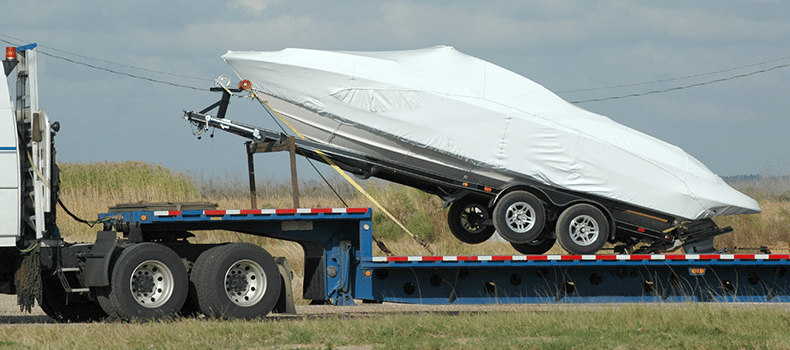
Boats are loaded using custom trailers with adjustable cradles or bunks. Haulers use nylon straps (not chains) and soft protectors to avoid damage. The goal is complete stability during transit.
2. The Journey
For oversized loads, carriers secure travel permits for each state, often facing restrictions like daylight-only driving or designated travel days. Wider loads may also require escort vehicles.
3. Unloading
At your destination, the hauler carefully releases the straps and either winches the boat into the water or positions it for land-based delivery.
WHAT DETERMINES THE COST OF BOAT TRANSPORT?
No two quotes are the same. Here are the key pricing factors:
1. Distance & Route
Longer trips cost more, but the route itself matters too. Highways are cheaper than backroads and rural detours.
2. Boat Size
The length, width (beam), height, and weight all influence the type of trailer needed and whether the load qualifies as oversize.
3. Permits
Oversized loads require permits per state. These can add hundreds of dollars in fees, especially for wide or tall boats.
4. Seasonality
Spring and fall are peak seasons. Booking in the summer or late winter can lead to better pricing.
5. Pickup & Delivery Complexity
Remote or hard-to-access marinas and neighborhoods may require more time, effort, or equipment, which increases cost.
Tip: Platforms like uShip streamline this process. Post your shipment once and receive multiple competitive quotes from licensed carriers, without making a dozen phone calls.
YOUR PRE-TRANSPORT CHECKLIST
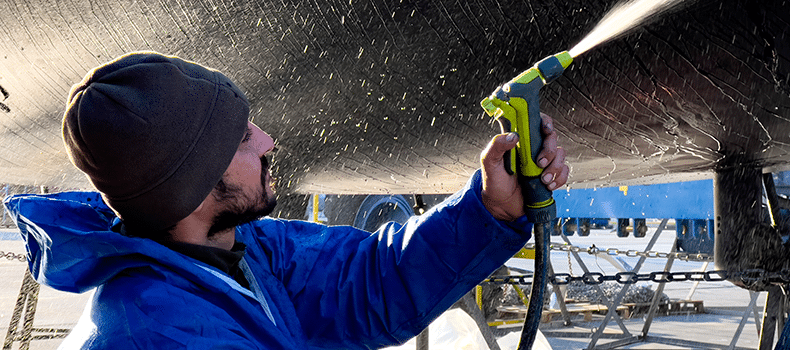
A little prep on your part makes a big difference in safety, cost, and turnaround time.
Clean and Inspect
Wash your boat inside and out. Document any existing damage with dated photos and notes.
Remove Loose Items
Take off electronics, covers, gear, dishes—anything not bolted down. It prevents theft and damage in transit.
Secure Doors and Hatches
Latch everything. Use tape if needed. Even minor movement can cause breakage during transport.
Drain Fluids
Empty freshwater tanks and livewells. Fuel tanks should be no more than 1/4 full to reduce weight and risk.
Measure Accurately
Provide your hauler with:
- LOA (Length Overall): Tip of the bow to stern or swim platform
- Beam: Widest point
- Height: From keel or trailer base to the highest point
Disconnect the Battery
This prevents accidental electrical drain or fire risk.
Being prepared shows professionalism and reduces the chance of surprise charges.
PERMITS, INSURANCE & LEGAL REQUIREMENTS
Oversize Rules
Each state has different DOT rules. Your hauler will handle this—but they must know what they’re doing.
Verify Credentials
Your transporter should have:
- A valid USDOT number (for safety and legality)
- An MC number (for interstate hauling)
You can look them up on the FMCSA website to check insurance and safety records.
Insurance Coverage
At minimum, your hauler should have:
- Liability insurance (covers damage to others)
- Cargo insurance (covers your boat)
Always request a certificate of insurance (COI) and confirm coverage is sufficient for your boat’s value.
How uShip Helps
- uShip verifies USDOT and MC numbers
- You can view insurance coverage and reviews on each hauler’s profile
- Optional additional cargo protection is available through uShip
CHOOSING A RELIABLE BOAT TRANSPORTER
When selecting a hauler, don’t just compare prices. Look for:
- Experience with Boats
Different boats need different handling. Ask if they’ve hauled your type before. - Proper Equipment
Trailers should match your hull type and size. Lowboys for sailboats, adjustable bunks for powerboats. - Verified Reviews
Read reviews on uShip. Look for consistent praise in communication, punctuality, and care. - Clear, Transparent Quotes
Your quote should include all expected charges: transport, permits, escort cars, etc. No hidden fees.
uShip makes this easy. Each transporter profile includes reviews, job photos, badges (like “On-Time Delivery”), and real customer feedback. You can message them directly within the platform before booking.
WHY USE USHIP FOR BOAT SHIPPING?
uShip is built to simplify land-based boat transport, offering:
- Verified, licensed carriers: No guesswork—just trusted professionals
- Competitive marketplace pricing: Carriers bid for your job, driving down cost
- Streamlined communication: No missed emails or phone tag—everything lives on the uShip platform
- Secure payment protection: Funds are held until you confirm delivery, protecting both sides
- Optional insurance add-ons: Add peace of mind with extra protection
- Tracking options: Some haulers offer GPS updates during the journey
CONCLUSION
Transporting a boat over land doesn’t have to be stressful. When you prepare properly and hire a professional through a trusted platform like uShip, you gain peace of mind and avoid costly missteps.
Your boat is a major investment—treat it that way. Whether you’re moving across the country or heading to a new lake for the season, safe, efficient transport starts with choosing the right hauler.
Ready to go?
Post your shipment on uShip today to receive instant quotes from experienced boat transporters ready to move your vessel with care.