Table of Contents
Table of Contents
What is LTL?
Let’s start from the top: LTL stands for less than truckload shipping.
LTL shipments don’t take up an entire trailer, so carriers can load several different shipments from several different companies on each trailer, maximizing efficiency and lowering your rates. Packing their trailers efficiently means carriers can move more, avoid empty truckspace, and organize the most efficient route possible.

Less than truckload freight works on a hub and spoke system.

Carriers combine shipments from multiple customers to create a full truckload shipment (FTL). The freight makes many stops between the pickup location and the delivery location. Each LTL shipment will likely change trailers several times, so all LTL shipments must be packaged securely to ensure they can be stacked and easily moved, which means shipments are typically crated or palletized.
Why choose LTL?
Cost: Cost-effectiveness is the main benefit of shipping LTL.
Tracking: LTL carriers allow for advanced freight tracking, which makes it simple to plan ahead for delivery.
Eco-friendliness: Since shipments are combined, fewer trucks are on the road. This means that fewer emissions are released into the air, reducing your carbon footprint.
Service Options: LTL carriers allow customers to choose between many service options which can help meet the needs of just about any customer or business.
What can I ship via LTL?
An easy rule of thumb is: can it be palletized or crated? If so, it can be shipped as LTL freight!
Some common categories of freight:
- • Manufactured Goods: Clothing, makeup, novelty goods, toys, decor, books, etc.
- • Food + Beverages: Wine, beer, liquor, coffee, spices, non-perishable grocery items, etc.
- • Industrial supplies: Paint, bolts, auto parts, marine parts, commercial plastics, etc.

LTL Options
When booking LTL freight, you’ve got lots of options. Before booking, read about each option carefully to ensure you’re booking exactly what you’ll need from the carrier. Not every carrier offers all services, so it’s important to understand what services you’ll need and book them in advance.
Terminal to Terminal:
If you don’t have a dock at the pickup or dropoff location, and don’t wish to pay for liftgate services, you can always pick up or drop your freight off at a local terminal.
Residential:
Most carriers will pick up and deliver to a residential area for an additional fee.
Liftgates:
Liftgates are used when a loading dock or forklift is not available to load/unload the freight. Many small businesses don’t have a dock or forklift, so booking liftgate services in advance will ensure a smooth pickup and delivery.
Inside Delivery:
Inside service refers to any time the driver must maneuver the freight across a threshold via pallet jack, as opposed to just dropping the freight at the back of the truck.This service is typically used when a loading dock is not available.
Expedited:
Expedited services are used when you need a carrier to rush deliver your freight.
Guaranteed on-time delivery:
Some carriers offer a time guarantee for an additional cost. This provides peace of mind for important or timely shipments.

Is it good for my business?
If you’re currently shipping with a traditional parcel carrier and feel you’re paying too much, it’s time to explore your LTL options. If you ship frequently, you may even qualify for volume discounts, which can drive your rates even lower.
There are a few restrictions when shipping LTL freight, which can vary from carrier to carrier. In general, your shipment must not exceed 43,999 lbs. and cannot include items certain like explosives. If your products are exceedingly fragile, invaluable or one-of-a-kind, LTL may not be the best shipping method. However, for the vast majority of goods, LTL is an excellent, money-saving option.
Is it good for my business?
If you’re currently shipping with a traditional parcel carrier and feel you’re paying too much, it’s time to explore your LTL options. If you ship frequently, you may even qualify for volume discounts, which can drive your rates even lower.
There are a few restrictions when shipping LTL freight, which can vary from carrier to carrier. In general, your shipment must not exceed 43,999 lbs. and cannot include items certain like explosives. If your products are exceedingly fragile, invaluable or one-of-a-kind, LTL may not be the best shipping method. However, for the vast majority of goods, LTL is an excellent, money-saving option.
The Basics: Freight Class
Carriers base their rates on a number of factors, including dimensions, weight, distance, services and sometimes, freight class.
Freight class is an industry-wide set of standards set by the National Motor Freight Traffic Association (NMFTA), which classifies types of freight into uniform categories. Just about any type of freight imaginable has an associated freight class. These freight classes determine the cost of shipping that type of freight, with class 50 being the lowest cost, and 500 being the highest.
Several factors determine freight class:
Density: Density represents how much an item weighs per unit volume. LTL freight’s density is measured in PCF, or pounds per cubic foot.
Stowability: Stowability is a measurement of how specific dimensions of freight will fit into a trailer. For example, a perfectly packed square pallet will stow more easily than a long, narrow crate.
Liability: If the freight is fragile or perishable, then the liability increases. As a result, the item is placed in a higher freight class.
Handling: If the shipment needs special services to be moved, this could cause the freight to be placed in a higher class.
The uShip Advantage: We base LTL pricing off of weight and dimensions, so you’ll never have to worry about freight class
The Basics: Insurance
All freight carriers have a minimum liability to help cover your freight in case of “exceptions,” in other words, damage or loss. This “carrier liability,” coverage is limited, sometimes to as little as 10 cents per pound of the shipment, and cannot exceed the invoice value of your shipment. Ask your about specific information on coverage, deductibles, and claims management.
We recommend you purchase additional insurance to cover your items. Freight insurance can be purchased from a variety of third-party companies which offer coverage that exceed carrier liability.
Using your insurance:
At delivery, inspect your shipment with your driver. Note any visible losses or damages. If you see any, take action as soon as possible. While every situation will be unique, there are a few general steps to follow in case of damage:
1. If a shipment is damaged upon arrival, the receiver has a right to refuse the shipment or sign for the shipment as ‘damaged.’
2. Note and photograph the damages
3. Contact the carrier and the insurance provider within 24 hours
The uShip Advantage: When you use uShip, you can purchase high-quality cargo insurance right in the booking process.
The Basics: Packaging
Freight can be damaged if it’s not properly packaged. Because it’s being moved and stacked, LTL freight could occasionally sustain damage, but it can easily be avoided by following some simple guidelines:
PACKAGING A CRATE:
- Use a high-quality crate or pallet. Don’t improvise and don’t compromise – purchase a pre-made crate, hire a crating company or build one yourself.
- Pack crates as full as possible to prevent shifting during transport.
- Pack heavier items on the bottom of the crate and place lighter items at the top and use packing material to fill excess space inside of the crate.
- Individually wrap items before crating to add an extra layer of protection.
- Clearly label the crate, mark which end is upright and whether or not the freight it fragile.
- Attach the bill of lading to the crate with clear tape.
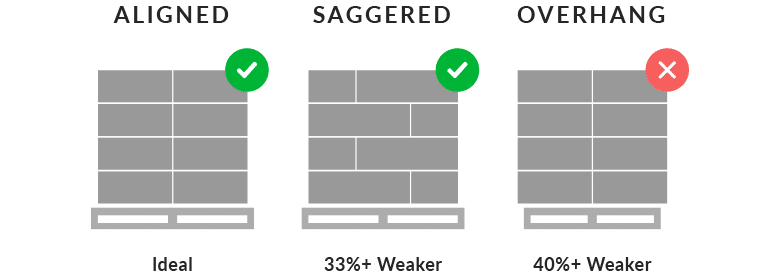
PACKAGING A PALLET:
Only use pallets that are in good shape and can be stacked and moved without strain.
Place items on the pallet as close to one another as possible, brace items against one another to minimize shifting.
When wrapping the pallet in plastic, start by grabbing about 8” of the end into a rope shape and threading it through one corner of the pallet, then keep wrapping!
Wrap the plastic around the entire pallet 4-5 times, pulling the roll tightly around each corner.
Work your way up so to securely attach boxes to the pallet, taking out as much stretch as possible.
When the stack is firm, tear the film apart from the roll and fold the end of it under the edge of another layer of wrap
HOW TO PACKAGE YOUR LTL SHIPMENT
The Basics: Bill of Lading
A bill of lading, or BOL for short, is a document that is required for shipping freight. Think of it like a manifest for your shipment — one that contains all the essential information that your carrier and driver will need.
It’s crucial to print three copies your BOL.
1. Tape one copy to your freight
2. Keep one for your records
3. Give one to the driver at pickup
When the freight arrives, be sure to have the receiving party check the freight for damages. If any damage is present, make sure the receiver of the freight & driver marks the delivery receipt and then signs it.


Mastering LTL
To make LTL shipments go smoothly and avoid problems like rebills, there are two themes to keep in mind:
1. Accuracy
2. Expectations
Mastering LTL
To make LTL shipments go smoothly and avoid problems like rebills, there are two themes to keep in mind:
1. Accuracy
2. Expectations
Accuracy
When you get a quote for LTL freight, the most vital element is accuracy. Getting accurate quotes is the best way to make LTL shipping consistently affordable.
Your rates are determined based on three factors, so being precise will get you the most accurate rate and the best experience.

1. Measurements – Measure your freight, then measure it again. If you’re unsure about an exact measurement, look for a manufacturer’s spec sheet for the item.
2. Weight – Weigh your freight carefully when it’s completely packaged and ready to go. Your carrier may re-weigh the shipment, and if it’s different from what you were quoted, it may result in an invoice discrepancy.
3. Services – If your shipment is going to a residential address, or will require the use of a liftgate or pallet jack on either end, you must indicate it when you book the shipment.
Expectations
LTL shipping works a little differently than other methods, so having the right expectations can ensure a smooth and successful shipment.
Timing
- • Efficiency is paramount in LTL freight, so transit times vary based on service level and by carrier
- • Estimated transit time should be clearly marked on every quote you receive, so they should never come as a surprise
- • For time-sensitive shipments, book with a carrier who offers Guaranteed On-time Delivery service
Pricing
- • Again, accurate quotes are the best way to avoid unexpected costs
- • Requesting services such as inside delivery or a delivery appointment, may affect your quote
Invoice Adjustments
Occasionally you might receive additional charges, sometimes called rebills, on an invoice after delivery. Some common reason for these extra charges are:
- • Inaccurate weight or dimensions – The quote you were provided for exactly the weight and dimensions you first specified. If its actual size is different than this, you may be charged
- • Accessorials – If a carrier provides a service not included in your quote, like the use of a liftgate, you may be charged
- • Reconsignments – If the location is different than what’s on your quote
Avoiding these charges is simple: measure, weigh, and plan your shipment as accurately as possible before booking. You’ll thank yourself later!
The uShip Advantage: You can rest easy knowing we audit every invoice for accuracy after your shipment’s complete.

Finding Great Rates
You might be surprised to find that the best rates available on LTL freight do not always come directly from carriers. These rates, known as ‘direct rates’ often come at full market value without discounts, especially for customers with low shipping volume. Small businesses often fall into this category.
Instead, the best bet for many shipping customers is to utilize a third-party logistics provider (3PL) or shipping marketplace like uShip. These companies operate exclusively with the purpose of providing lower rates and customer service to shipping customers. Discounts when booking through one of these services are often above 80% – seriously!
Finding Great Rates
You might be surprised to find that the best rates available on LTL freight do not always come directly from carriers. These rates, known as ‘direct rates’ often come at full market value without discounts, especially for customers with low shipping volume. Small businesses often fall into this category.
Instead, the best bet for many shipping customers is to utilize a third-party logistics provider (3PL) or shipping marketplace like uShip. These companies operate exclusively with the purpose of providing lower rates and customer service to shipping customers. Discounts when booking through one of these services are often above 80% – seriously!
The uShip Advantage: Instant quotes from dozens of carriers mean you can shop around and compare against direct rates.
HOW TO CHOOSE AN LTL CARRIER
Important factors to consider when choosing freight companies are:
- • Transit time: If you have time-sensitive shipments, choose a carrier the offers guaranteed rates
- • Location: Some LTL carriers will not service certain location types such as trade shows, auctions, or military locations
- • Service levels: Some carriers don’t provide certain services. Look for one that offers the specific services you need before requesting a quote
- • Volume: If you’re shipping 10+ pallets, some LTL carriers offer volume rates

The uShip Advantage: Save time and headache by comparing rates from 30+ top LTL carriers instantly with our platform
The uShip Option
When it comes to shipping LTL freight, you’ve got lots of options. Booking with a marketplace like uShip could save you significantly over booking directly, but how do you choose a partner to begin with? The uShip LTL solution is specifically built to ensure simplicity and transparency with every single shipment. It’s a tech-enabled way to make shipping freight efficient and seamless.
One Stop Shop
Stop spending your days running quotes through individual carrier websites. Run a quote just once on uShip, and you’ll instantly see competing rates from up to 30 top LTL carriers. Plus, you get the convenience of having all your shipments managed in one place – it’s like a free TMS system with plenty of built-in perks.
Lower Rates
On uShip, carriers compete for your business, which drives costs lower for you. Plus, with solutions like volume discounts and the option to import existing contract rates, you’ll know you’re getting the best rates out there.
Expert Support
Whether you’re a seasoned expert or new to the LTL shipping world, it’s always good to have an ally in the industry. That’s exactly what you get with uShip – an expert support team that’s standing by to offer assistance with exceptions, questions or issues, every step of the way.
Quality Insurance
While most carriers have their own liability insurance, it’s a good idea to protect your cargo with your own cargo insurance, which you can purchase through us during the booking process. Rates are competitive, and deductibles are as low as $50.
Top LTL carriers on uShip

Glossary
BOL: The Bill of Lading, a document containing all essential information about your shipment
Carrier Liability Insurance: The minimum amount of insurance coverage which LTL carriers are required to carry
3PL: A third-party logistics provider which acts as a liaison between shipping companies and shipping carriers
Direct Rates: Rates access directly from an LTL carrier, typically over the phone or through the carrier’s website
Rebills: Additional charges added an invoice after a shipment is completed
Accessorials: Fees for extra costs associated with a shipment included liftgate use, residential access, or delivery appointments
Ships From: Here, you will want to include information about where the shipment is being picked up from. Provide the name of the business, the address, contact person, and a good phone number.
Ships To: This is the address where the freight will be delivered to.
PRO Number: The driver will place a sticker directly on the bill of lading upon pickup. You can use the PRO number to track your LTL shipment.
Freight Charge Terms: This area represents how the payment will be made for shipping. Typically, if you are using a service like uShip, it will state 3rd party prepaid.
SCAC: The Standard Carrier Alpha Code (SCAC) is two to four letters long and represents a transport company.
Third-Party Bill To: If you were to use a third party to book your freight, such as uShip, its address would go here.
Special Instructions: This is where you put specific notes for the carrier such as gate codes, certain doors to use for access, etc.
Additional Services: You will see any services that are not standard such as liftgates.
Pickup Date: The date that your freight is to be picked up.
PO or Reference Numbers: These numbers are important when the driver arrives at a warehouse to pick up your freight. They will need to reference them in order for the freight to be released.
NMFC Number and Freight Class: Shipments are divided into 18 classes based on weight, dimensions, and other important factors. That said, when you use uShip, you don’t have to worry about this part. We automatically calculate your freight class based on the density of your shipment.