

TL;DR: How Much Does U-Haul Really Cost?
- The advertised rate is just the starting point: $19.95 covers the truck only. Mileage, fuel, insurance, and fees are all billed separately.
- Mileage adds up fast: Local rentals charge per mile on top of the base rate; long-distance rentals charge for every mile over your quoted allotment.
- Fuel costs more than you'd think: U-Haul trucks average just 10 to 12 mpg, and returning the truck under a full tank means paying U-Haul's above-market refueling rate.
- Insurance and equipment are optional but common: Damage protection runs $14 to $28 a day, and most moves need at least some rented equipment.
- The real total: A $19.95 rental routinely ends up costing double or triple that once everything is added in.
- The alternative: uShip lets you compare full quotes from independent, feedback-rated carriers upfront, with no truck to drive and no fine print to catch you off guard.
A U-Haul rental is one of America's most recognizable deals: $19.95, printed right on the side of the truck, but it's also one of the most misleading. That number covers the truck and nothing else. Mileage, fuel, insurance, equipment, and a handful of smaller fees all get added on top, and by the time you're done, the total can run double or triple what you expected to pay.
This isn't a rare surprise, either. A TikTok video of a woman who showed up to rent a U-Haul with just $24 to her name, only to learn it wouldn't cover the actual cost, went viral with more than 2.6 million views. Her story struck a nerve because so many people have been there.
Here's a full breakdown of where U-Haul's advertised rate ends and your actual bill begins.
U-Haul's Advertised Base Rate: What $19.95 Actually Covers

The $19.95 rate applies to U-Haul's smallest vehicles, an 8-foot pickup, a 9-foot cargo van, or a 10-foot box truck, and only for "in-town" rentals, meaning you pick up and drop off at the same location. Larger trucks start higher: 10' and 15' trucks typically run $29.95, and 20' and 26' trucks start around $39.95.
That base rate covers access to the vehicle. It does not cover mileage, fuel, insurance, equipment, or taxes, all of which are billed separately.
Mileage Charges: Per-Mile Fees and Overage Costs
For local, in-town rentals, U-Haul charges a per-mile rate on top of the base fee, typically 59 cents a mile for a pickup or van and closer to 89 cents a mile for a box truck, though rates vary by location. A 50-mile round trip alone can add roughly $30 to $45 in mileage charges, which already puts you at double the advertised $19.95.
For one-way, long-distance rentals, U-Haul builds a set number of miles into your quote upfront. Go over that allotment, and you'll pay roughly $1 for every additional mile, with no refund if you end up driving fewer miles than you were quoted for. Renters on sites like Reddit have reported being billed for mileage they never actually drove, which is why it's worth photographing your odometer at pickup and drop-off.
Fuel Costs and U-Haul's Refueling Fee
Moving trucks are not fuel-efficient. Most U-Haul trucks average just 10 to 12 miles per gallon, so fuel adds up fast, especially on longer moves. You're also required to return the truck with the same amount of gas it had at pickup. Fall short, and U-Haul will refuel it for you and bill you at a rate that typically runs above what you'd pay at the pump.
Insurance and Protection Add-Ons
At checkout, U-Haul offers optional damage protection called Safemove, priced around $14 a day, along with a supplemental roadside protection plan called SafeTrip for about $5. Neither is required, and U-Haul's own site notes that credit cards and most auto insurance policies don't cover damage to rental trucks, which is part of why many renters add the coverage anyway. Depending on the level you choose, insurance and protection add-ons can run $14 to $28 per day.
The Environmental Fee
U-Haul also tacks on a small environmental fee, typically around $1 to $5 per rental. It's a minor line item on its own, but it's one more charge that isn't reflected in the advertised rate.
Equipment Rentals: Dollies, Furniture Pads, and More
Furniture pads, hand trucks, and moving dollies all rent separately, and most moves need at least some of this equipment to protect your belongings and make loading manageable. These add-ons are inexpensive individually, but they stack up alongside everything else.
Late, Dirty, or Damaged Return Fees
Return the truck late, without cleaning it out, or with damage, and U-Haul will charge additional fees on top of everything else. These penalties are entirely avoidable, but they catch renters who underestimate how long a move will actually take.
So How Much Does a U-Haul Move Really Cost?
Add it up, and a local rental advertised at $19.95 routinely lands well past $60 once mileage, fuel, and even basic insurance are factored in, and that's before equipment rentals or a longer trip. Consumer watchdog groups have flagged this gap between the advertised price and the real cost as a bait-and-switch problem for years, and it's the reason a rental that looks like the cheapest option on paper often isn't once you're at the counter.
How to Avoid U-Haul's Hidden Fees
If you do go the U-Haul route, a few habits can help you avoid the worst of the fee creep:
- Photograph the odometer and fuel gauge before and after your trip.
- Ask for a full written quote that includes estimated mileage, taxes, and insurance, not just the daily base rate.
- Drive conservatively to save on fuel, and return the truck with the tank at the level you received it.
- Return the truck on time and clean to avoid late or cleaning fees.
- Skip U-Haul's optional insurance if you're already covered through your auto policy or credit card.
- Compare rates at other truck rental companies before booking. Some offer unlimited mileage on certain routes, which can change the math significantly.
A Different Way to Move Big Items
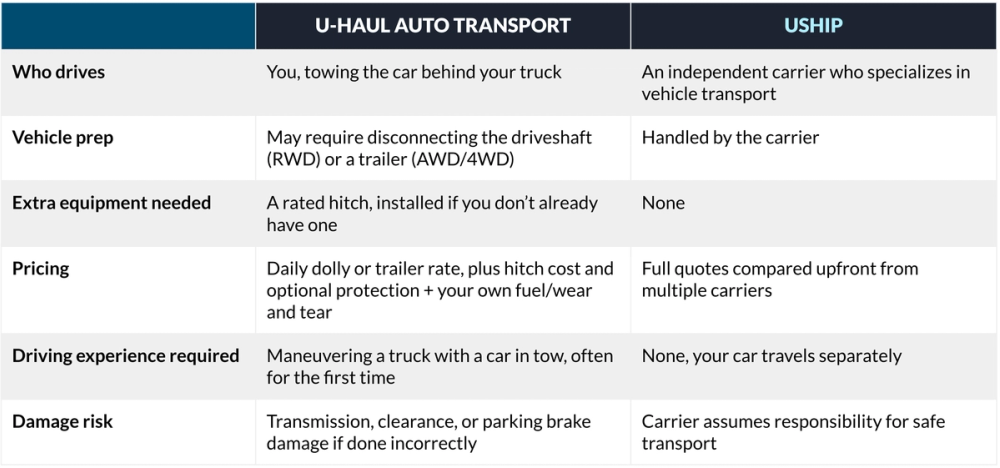
All of this assumes you're comfortable driving a truck you've likely never handled before, then loading and unloading it yourself. If you'd rather skip the mileage math, the fuel gauge photos, and the driving altogether, uShip connects you with independent feedback-rated carriers who do the driving and the heavy lifting for you. You see full quotes from multiple carriers upfront, so there's no fine print to catch you off guard later.
See our full breakdown of U-Haul alternatives for a closer look at how the two options compare.
FAQs About U-Haul Costs
How much does U-Haul really cost? Beyond the advertised base rate, expect to pay for mileage, fuel, optional insurance, an environmental fee, and any equipment you rent. Combined, these routinely push the total to double or triple the advertised price.
Does U-Haul charge for mileage? Yes. Local, in-town rentals are charged per mile on top of the base rate. Long-distance, one-way rentals include a set number of miles in the quote, with overage fees for every mile beyond that allotment.
What is U-Haul's environmental fee? It's a small charge, typically $1 to $5, added to every rental regardless of the vehicle or trip length.
Is U-Haul's insurance worth it? It depends on your existing coverage. U-Haul notes that most auto insurance policies and credit cards don't cover rental truck damage, which is why many renters add Safemove or SafeTrip. If you're already covered elsewhere, it may not be necessary.
Is renting a U-Haul cheaper than using uShip? It depends on the move. U-Haul's advertised rate doesn't include mileage, fuel, or insurance, all of which add up after the fact. uShip lets you compare full quotes from multiple carriers upfront, so you know the real cost before you book, and you're not the one driving or doing the lifting.